Driving Guide · 12 August 2026 · 8 min read
What you actually need to know before driving a campervan in Greece
Speed limits (50/90/130 km/h), mountain roads, toll basics, and what actually happens if something goes wrong — the practical picture, not the scary stories.
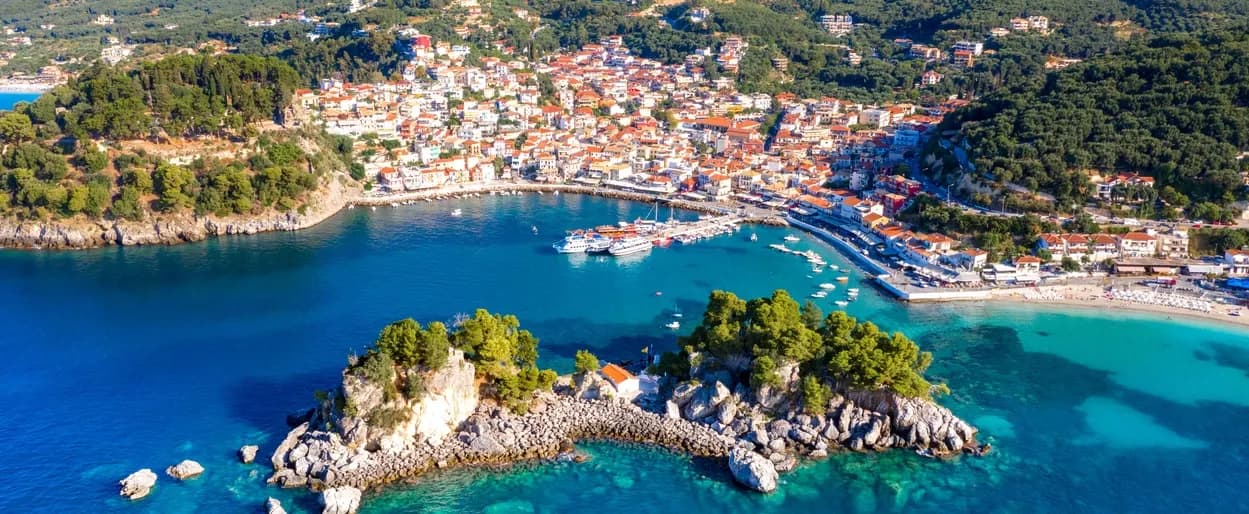
Driving a campervan in Greece sounds scarier than it is. The roads are different from the UK, Germany or the Netherlands, and Greek driving has its own rhythm — but once you understand a few local quirks, it stops feeling like an obstacle and starts feeling like part of the trip.
Here's the practical picture, section by section.
You drive on the right
If you're coming from the UK, this is the big adjustment. It feels unusual for about twenty minutes and then your brain resets. Roundabouts go anticlockwise; the trickiest moments tend to be pulling out of petrol stations and early mornings when you're still half asleep.
Speed limits
For a standard car: 50 km/h in built-up areas, 90 km/h on rural/national roads, and up to 130 km/h on motorways depending on the section. Most campervans over 3.5 tonnes are treated as heavier vehicles, with lower limits — typically 50 km/h in towns and 80 km/h on both national roads and motorways. Posted signs always override the defaults.
Fuel
Diesel and unleaded are available throughout mainland Greece and the larger islands. Prices move with the wider European market, so check current rates before you travel rather than relying on a fixed figure. Rural stations often close on Sundays and after 8–9pm — don't let the tank drop too low in the countryside, and expect an attendant to fill up for you rather than pure self-service.
Mountain roads deserve respect
Many of the best destinations — mountain villages, hidden beaches, monasteries — sit at the end of narrow, winding roads with steep drop-offs and no barriers. Go slower than you think you need to, use your horn on blind corners, and pull over to let faster local traffic pass. If a road looks too narrow for your van on the satellite map, it probably is.
Parking a campervan takes a little planning
Supermarket car parks and port areas are usually spacious and easy. Avoid squeezing into narrow village centres — park on the outskirts and walk in instead. Overnight parking in your vehicle is broadly tolerated in appropriate spots such as car parks, but a 2025 law update explicitly bans parking or pitching on beaches, archaeological sites and the edges of public forests — and setting up furniture outside the van crosses into camping too. Both carry real legal restrictions — see our full guide on where you can stay for the details.
Greek driving culture: assertive, not aggressive
Slower traffic pulls onto the right shoulder on two-lane roads to let faster cars overtake — expected behaviour, often thanked with a quick flash of the hazards. A short horn beep usually just means "I'm here," not anger. Overtaking can look bold by the standards of a German Autobahn or a Dutch motorway; stay in your lane, drive predictably, and don't take it personally.
If you have an accident
Stop immediately and put on your hazard lights. Call 112 (the general European emergency number) if anyone is hurt, and the police on 100 for a report if the accident involves injury or significant damage. Exchange details with the other driver, photograph everything, and contact your rental company — they'll guide you through the insurance process. Don't admit fault or sign anything you don't fully understand.
Insurance
Most campervan rentals include third-party liability insurance with a standard excess. Ask specifically about the excess amount, whether windscreen and tyre damage are covered, and whether a collision damage waiver is available to reduce your exposure. Read the policy before you leave so there are no surprises.
Night driving
Rural roads are often unlit, and animals — goats, dogs, cats — wander freely, especially after dark. Motorcycles and scooters occasionally ride without lights. Stick to main roads at night where possible, and avoid mountain roads after dark in a campervan.
Common mistakes to avoid
Not carrying cash for tolls and small petrol stations, following GPS onto a road too narrow for a campervan without checking satellite view first, letting the fuel gauge get too low in rural areas, and forgetting that speed cameras and traffic fines are real — rental companies do pass fines on to you.
Documents to carry
A valid driving licence — UK photocard licences are recognised in Greece without restriction post-Brexit, and an International Driving Permit isn't required for a standard photocard licence, though it doesn't hurt to have one if you're travelling on an older paper licence. Keep your vehicle registration documents, insurance certificate and passport or ID with you, and photos of everything on your phone as backup.
Emergency numbers worth saving
Keep these in your phone before you set off:
| Service | Number |
|---|---|
| General emergency (EU-wide, English-speaking operators) | 112 |
| Police | 100 |
| Ambulance | 166 |
| Fire brigade | 199 |
| Tourist police | 171 |
| Coastguard | 108 |
| Roadside assistance (ELPA) | 10400 |
ELPA roadside assistance is free for members of ELPA and reciprocal motoring clubs (AA, RAC, ADAC and similar) on presentation of membership; non-members are charged.
Ready for the road?
Browse our fleet or read our Aktion Airport pickup guide to see exactly how the handover works before you set off.
Join the Waitlist