First-Timer Guide · 25 August 2026 · 8 min read
Renting a campervan in Greece for the first time: what to expect from pickup to drop-off
Nervous about your first campervan trip? Here's the honest, practical guide to a 30-45 minute pickup walkthrough, driving it, sleeping in it, cooking in it — and yes, the toilet situation, emptied every two to three days.
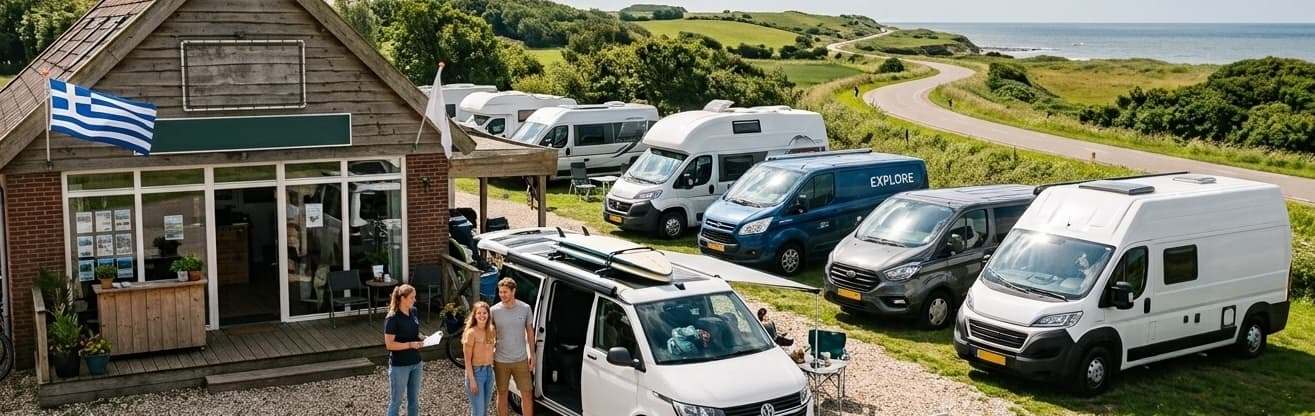
You're planning a campervan trip. The flights are sorted. And now the questions pile up: how big is this thing to drive? Where do I actually sleep? What about the toilet? This guide walks through exactly what happens from pickup to drop-off, so there are no surprises — just the good kind.
What happens at pickup
You'll get a proper, unhurried orientation — typically 30 to 45 minutes — walking through everything together, right at the van:
- Driving basics — mirrors, blind spots, where the van is widest
- The bed — how to convert from seating to sleeping
- Kitchen — how the stove works, where everything is stored
- Water system — where the fresh water tank is and how to check levels
- Electrical — charging, the leisure battery, shore power
- The toilet — how it works and how to empty it
- Heating and ventilation — the pop-top and windows
Driving: easier than you think
A compact campervan is not a truck. It drives like a large car, with a normal driving position, power steering, and — in most modern vans — a reversing camera. Height matters more than width for clearance; as long as you avoid underground parking without a clear height sign, you'll be fine.
Most people tell us they forget they're driving a campervan within the first hour. For the fuller picture on Greek roads, speed limits and driving culture, see our dedicated driving guide.
Where to sleep
Campsites
Expect to pay somewhere in the €18–30 range per night for a campervan pitch with two adults, with hot showers, electrical hookup and usually a small shop or nearby taverna. See our campsite guide for specific recommendations.
Free overnight parking
Greece is broadly tolerant of campervans sleeping overnight in appropriate spots — beach car parks, quiet harbours, rural pull-offs. The distinction that matters legally is parking versus camping: stay inside the vehicle, don't set up furniture outside, and move on the next morning. Our full guide on where you can stay covers the legal detail.
Apps that help
Park4Night is the essential one — thousands of spots across Greece with photos and reviews from other travellers. Download offline maps for your region before you go.
Cooking and water
A well-equipped campervan kitchen typically has a two-burner gas stove, a sink, a fridge running on the leisure battery or shore power, and a full set of pots, plates and cutlery for two. You can realistically cook pasta, omelettes, one-pot stews and coffee — anything you'd make on a normal stovetop at home.
The fresh water tank generally holds enough for a couple of days of normal use; refill at campsites or petrol stations with outdoor taps. Many people buy bottled water for drinking, since tap water quality varies by area, but tank water is fine for cooking and washing.
The toilet situation
Campervans typically come with a portable cassette toilet — a self-contained unit in its own compartment. You use it like a normal toilet; the waste goes into a removable, sealed cassette that you empty at a disposal point (usually near the shower block at any campsite) roughly every two to three days.
It's not glamorous, but it's genuinely not unpleasant either — the cassette is sealed, there's no smell in normal use, and emptying takes a few minutes. Most people use campsite or taverna bathrooms during the day and the cassette mainly at night.
What's typically included in the rental
- Bedding — duvet, pillows, fitted sheet
- Kitchen equipment — stove, fridge, pots, plates, cutlery
- Camping chairs and a folding table
- Electrical — USB charging, 12V socket, shore power cable
- Safety kit — fire extinguisher, first aid kit, warning triangle
- Portable toilet with chemical tablets
What to bring from home
- Clothes for warm weather, with layers for cooler evenings
- Sunscreen and a hat
- A headlamp or small torch
- Your driving licence — an EU photocard licence works directly; non-EU visitors should check current requirements for an International Driving Permit
- A reusable water bottle
- Any medications you need
Insurance basics
Rentals typically include comprehensive insurance with a standard excess (deductible) — you're covered for collisions, theft and third-party damage, and responsible for a capped amount if something happens. Ask specifically about the excess, whether it can be reduced with a supplementary package, and whether windscreen and tyre damage are covered separately.
What if something breaks down
- 1Call your rental company — you should have a direct number, and most issues (a tripped fuse, a closed gas valve) get talked through in a couple of minutes.
- 2If it's a real problem, roadside assistance gets arranged, or the company comes to you.
- 3In the rare case of a genuine mechanical issue, a well-run rental will arrange a replacement van or alternative accommodation rather than leaving you stranded.
Ready to see the vans?
Head to our fleet page and pick the one that catches your eye.
Join the Waitlist