Food Guide · 30 August 2026 · 9 min read
What to eat across Lefkada, Preveza, Parga and the Epirus mountains
Western Greece cooks from a different pantry than the islands you've read about. Here's what to order, how taverna culture actually works, and what a meal really costs.
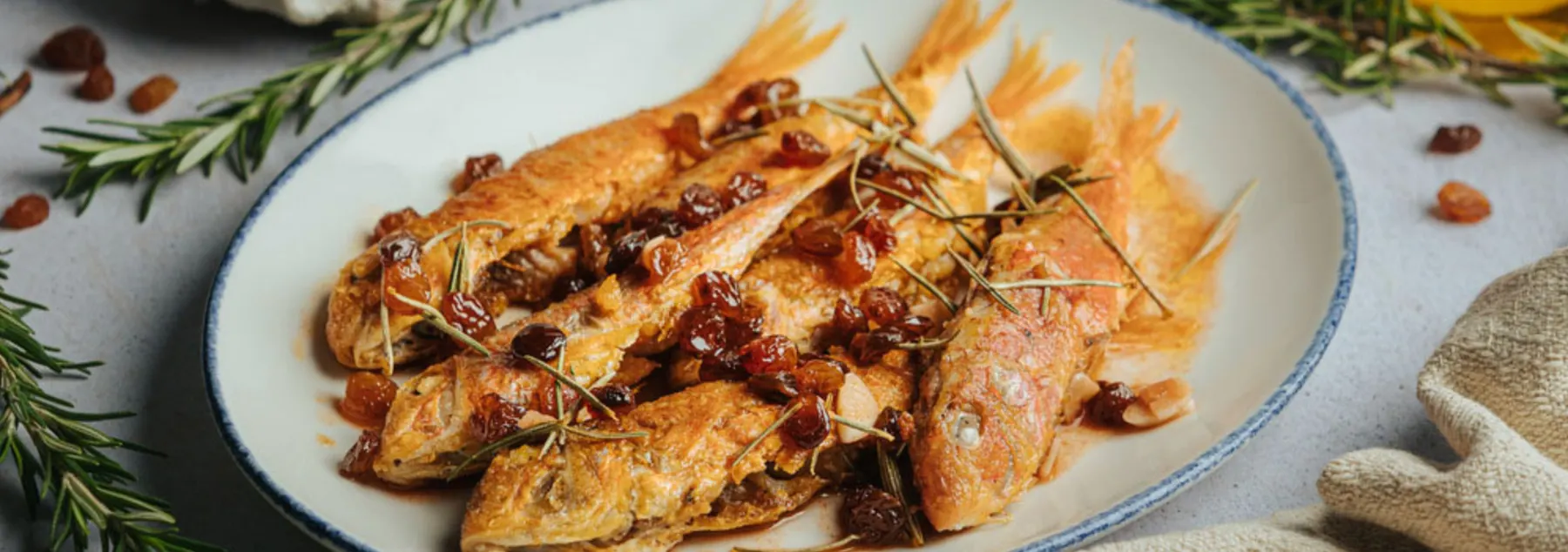
If your idea of Greek food comes from a week on Santorini or Mykonos, western Greece will reset it. This isn't Cycladic food — no sun-dried tomatoes, no caper-heavy salads baking in the wind. The Ionian coast and the Epirus mountains behind it draw from a different pantry entirely: Venetian-influenced sauces, mountain herbs and cheeses, slow-cooked meat, and seafood pulled from a calmer, warmer sea than the Aegean.
It's also a region small enough, and quiet enough, that the food still feels local rather than performed for visitors. A campervan is a genuinely good way to eat your way through it, because the best versions of most of these dishes aren't on the harbour-front menu with the English translation — they're a short drive further out, in a village taverna that doesn't especially need your business.
This guide covers what to actually order by area — Lefkada, Preveza, Parga, and the Epirus mountains inland — plus how taverna culture works, what to drink, and roughly what it'll cost you.
Lefkada: where sea and mountain meet
Lefkada's signature dish is savoro: fish, usually small and delicate, fried until the skin crisps, then drenched in a sauce of rosemary, garlic, and red wine vinegar. It's sweet, sharp, and unmistakably Venetian in its DNA — the island spent centuries under Venetian rule, and it shows on the plate more than almost anywhere else in the guide. Order it wherever you see it.
You'll also find bourdeto on plenty of Lefkada menus — a brick-red fish stew built on paprika and a real kick of chilli. It's actually a Corfu dish originally, carried across the Ionian and now thoroughly at home on Lefkada's tables too, rather than something the island invented itself. Either way, it's the one to order on a cooler evening, with bread for mopping the pot.
Drive up into the island's interior and the food changes register entirely. The mountain village of Englouvi is known across Greece for its lentils — small, earthy, and holding their shape rather than turning to mush — and the Englouvi lentil is now an EU-registered Protected Designation of Origin product, one of a batch of Greek foods to receive that status in late 2024. You'll find them served warm with olive oil and lemon, or worked into soups and salads.
Preveza: the seafood town
Preveza sits on the Ambracian Gulf and does one thing with real focus: seafood, simply prepared. Walk the waterfront in the evening and every taverna has the day's catch laid out on ice. Gavros — anchovies, fried whole until they crackle or marinated raw in vinegar and oil — is the thing to try first, alongside sardines grilled over charcoal until the skin blisters.
Octopus, grilled or slow-braised in red wine, is another safe order almost anywhere on the front. Beyond seafood, Preveza sits at the edge of Epirus, and that shows on the menu too — look for a local pie with thin, handmade phyllo wrapped around wild greens, cheese, or leek, the same tradition that runs right through the Epirus mountains further inland.
Parga: coastal eating with a mountain accent
Parga's harbour tavernas do good, honest fish, but the town's real value is its position — it sits right at the point where the coast meets the road inland to Epirus, and the food on offer reflects both. It's a good place to try an Epirus-style pie without leaving the coast: thin phyllo, often spiral-wound, filled with whatever's in season — wild greens, pumpkin, leek, or a mix of local cheeses.
Local honey, usually thyme or wildflower, turns up drizzled over thick yoghurt as a dessert, and it's worth picking up a jar from one of the shops along the waterfront or in the villages above town to take home.
The Epirus mountains: lamb, goat and cheese
Drive inland and up, toward the villages of Zagori and Metsovo, and the food changes completely. This is lamb-and-goat country: slow-roasted lamb, cooked until it falls apart with a fork, is the centrepiece of most mountain taverna menus, alongside goat stewed with tomato and orzo.
The cheese is the real reason to make the trip, though. Metsovone — a smoked, semi-hard cheese from the town of Metsovo — has been an EU-protected PDO product since 1996, and it's genuinely unlike anything else you'll eat on this trip: dense, smoky, faintly elastic. Locals grill slices until the outside chars and the centre turns molten, then serve it with black pepper. If you only try one cheese in western Greece, this is the one.
Trachanas — a thick, tangy soup made from cracked wheat fermented with milk or yoghurt — sounds humbler than it tastes. On a cool mountain evening with a glass of tsipouro on the table, it's exactly right.
How taverna culture actually works
Greeks eat late. Lunch runs roughly 14:00 to 15:30; dinner rarely gets going before 21:00, later still on weekends. Turn up at 19:00 and you may have the place to yourself — turn up at 22:00 on a Saturday and you'll be in the middle of it.
Ordering is communal, not per-person. A table shares a spread of small plates, a salad or two, and a main or two, all placed in the middle for everyone to pick from. For two people, three or four dishes plus a salad is usually about right.
Bread isn't free, exactly — most tavernas add a small cover charge, the couvert, usually a euro or two per person, which covers bread, a small starter of some kind, and table setting. It's standard practice, not a scam, and it'll show up as its own line on the bill.
Tipping is informal: round up, or leave roughly 5-10% for good service, in cash on the table if you can. Nobody will chase you for more, and nobody will rush you to leave — the bill only comes when you ask for it.
What to drink
Vertzami is Lefkada's own grape — an indigenous red variety, likely introduced during the Venetian period, that now accounts for roughly 90% of the island's vineyards. It makes a dark, velvety wine with plenty of black fruit, and it's worth asking for by name at any Lefkada taverna. Lefkaditiki Gi, based on the Nydri-Vasiliki road in the island's south and generally considered the island's main commercial winery, and Vertzamo Winery, a family operation in Lygia running since 1965, are both worth looking out for on a wine list.
Tsipouro is the spirit of the Epirus mountains — a clear, strong grape-pomace distillate that ranges from smooth to genuinely fierce depending on who made it. In mountain tavernas it often turns up at the table unbidden alongside a small plate of something to eat. Sip it slowly and never on an empty stomach.
Greek coffee, brewed in a small copper pot with the grounds left in the cup, is ordered sketo (no sugar), metrio (medium), or glyko (sweet); in summer most people switch to a cold, shaken freddo espresso or freddo cappuccino instead, both available everywhere.
What a meal actually costs
Western Greece is still excellent value for what you get. These are rough, seasonal ranges rather than fixed prices — expect the upper end in July and August, and treat any single bill as a guide rather than a guarantee.
| Meal type | Typical cost per person | Notes |
|---|---|---|
| Coffee and a pastry | €3-5 | Freddo espresso or Greek coffee, plus something sweet |
| Souvlaki or gyros (street food) | €3-4 | A reliable, fast, cheap option almost anywhere |
| Casual taverna lunch, shared | €12-18 | A few small plates and a glass of house wine |
| Seafood taverna dinner | €20-30 | Multiple courses, wine included, coastal towns |
| Mountain taverna dinner | €15-22 | Lamb or goat, cheese, often with tsipouro |
| House wine, half-litre carafe | €5-8 | About two generous glasses |
A couple eating well and drinking local wine, without holding back, should budget somewhere around €50-70 a day between them for all meals — it's easy to spend less, and hard to spend much more.
Keep planning your trip
- Lefkada by campervan: beaches, roads and campsites
- Preveza: the town most tourists drive straight past
- 7 Days in Western Greece: the complete campervan itinerary
- Browse our campervan fleet
The best meals here aren't on the main road
The taverna worth the detour is usually the one without an English menu, a village or two off the coast road. Having your own campervan means you can actually chase it down instead of settling for whatever's nearest the car park.
Join the Waitlist